88.8% of the Endemics in the Lesser Antilles
Islands we will visit on this trip: Dominica, Grenada, Martinique, St Lucia & St Vincent
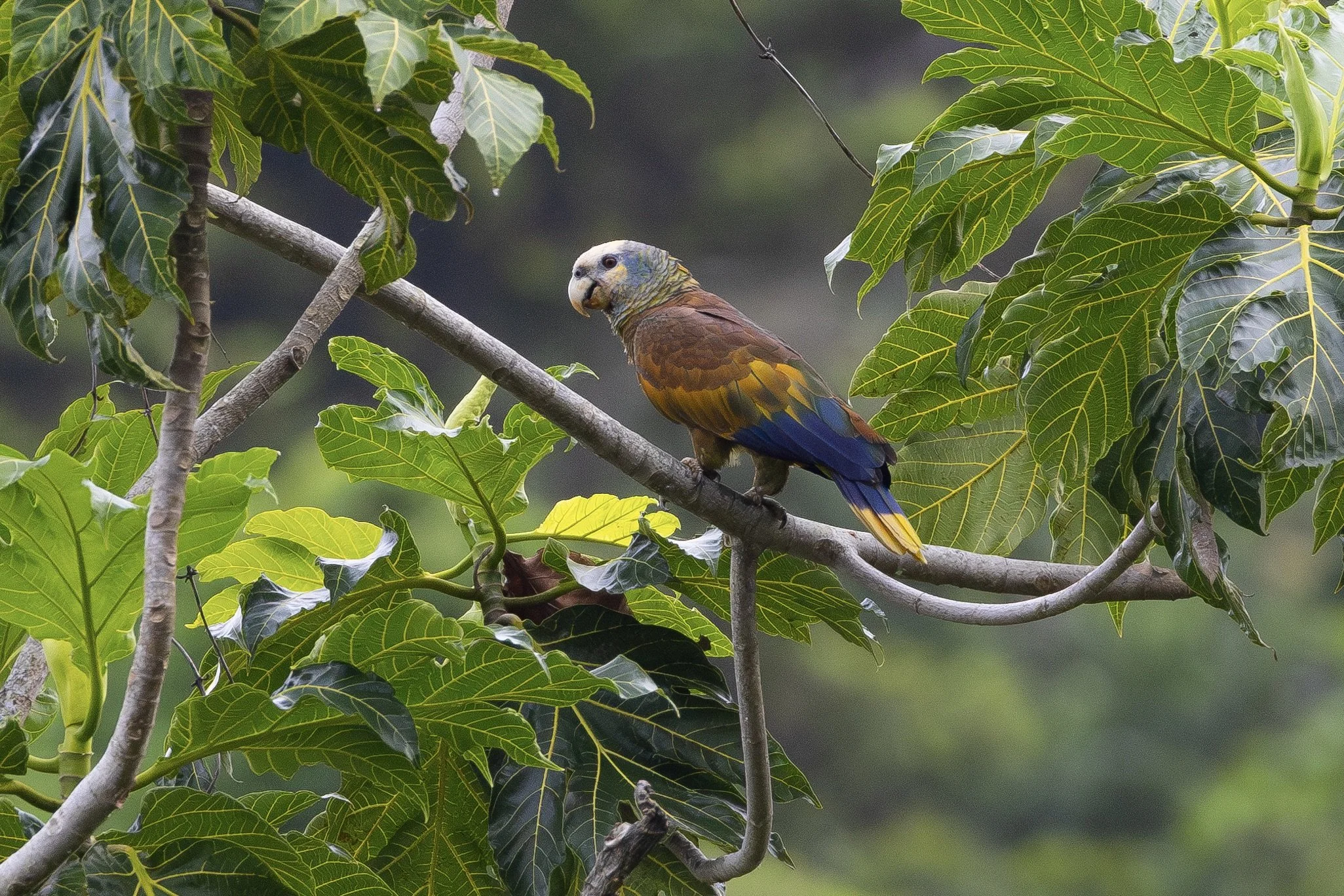
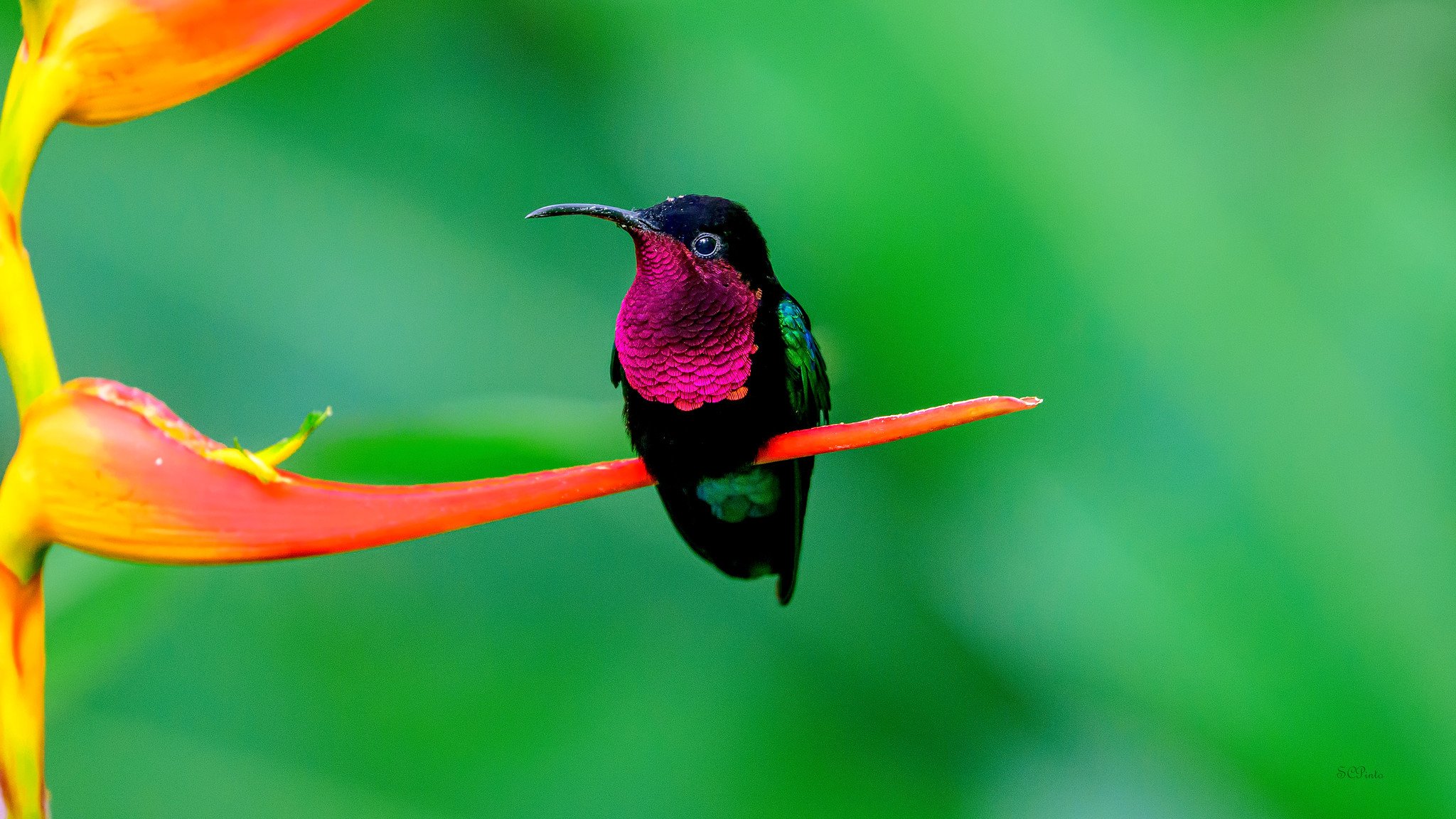
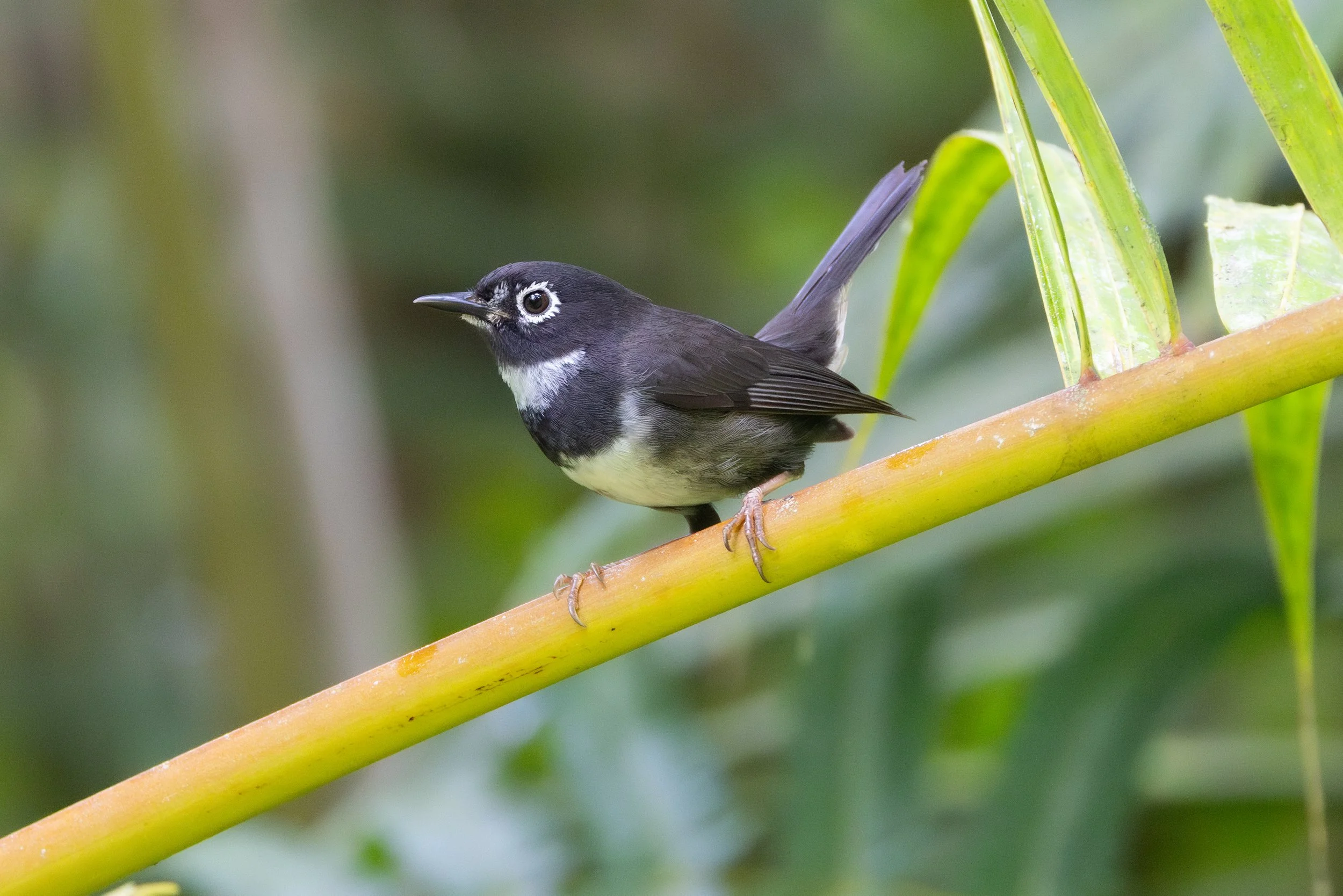
The Lesser Antilles is home to stunning, and often critically endangered endemics. L to R: St. Vincent Parrot Photo © Jonathan Slifkin - Birding the Islands client; Purple-throated Carib Photo © Shailesh Pinto - Birding the Islands client; Whistling Warbler Photo © Jonathan Slifkin - Birding the Islands client
Overview
Five Islands, Eleven days, and the lion’s share of the endemics possible in this magical south-eastern corner of the Caribbean. This shorter version of our 14-day Every Endemic in the Lesser Antilles tour has been specifically designed to provide birders with the opportunity to focus their birding on five of the most biodiverse and bird-rich islands to be found within the inner volcanic arc of the Lesser Antillean region.
The lush, densely forested islands of St. Lucia, St. Vincent, Grenada, Dominica and the French Overseas Territory of Martinique, are dominated by towering volcanic peaks, spectacular beaches and glistening turquoise seas, and together also happen to be home to the vast majority of single-island endemics, near-endemics and regional specialities known to the Lesser Antillean region.
Upcoming Tour Dates
2027
March 9th - 19th: SPACES AVAILABLE. Please contact us here to express your interest in this tour. Tour leader: TBA
2028
March 7th - 17th: SPACES AVAILABLE. Please contact us here to express your interest in this tour. Tour leader: TBA
Tour Price
From US$5985 per person - for detailed pricing please scroll to the bottom of this page.
This tour can be paired with our optional extension to Trinidad & Tobago. For a sample itinerary and pricing of the extension, please click here.
Tour Highlights
Stays in locally-owned and operated lodgings - several of which offer sea views or are directly on the beach.
Indulge in a selection of freshly made, authentic local meals - some of the dishes unique to each island.
Bird the sprawling Des Cartiers Rainforest and dry broad-leaved forests of St. Lucia - an island home to the greatest number of single-island endemics in the region!
Watch in awe as spectacularly plumaged St. Vincent Parrots return to their roosts and sprinkle the forests in a blaze of colour.
Explore Dominica’s cloud-enshrouded moist montane forest for encounters with her two majestic species of endemic parrot and an introduction to a wide array of fascinating local flora.
Stroll along trails deep within the majestic Carbet Mountain range - home to the oldest forests in the region - and enjoy views of the stunning Martinique Oriole and dazzling Blue-headed Hummingbird.
Seek out an audience with what could possibly now be the rarest bird on the planet - the demure Grenada Dove - in its last remaining fragment of habitat.
Field Guide
Birds of the Lesser Antilles HELM field guide by Birding the Islands owner Ryan Chenery (available to purchase in stores worldwide and online).
Sample Daily Itinerary
Please note that due to regional flight and boat schedules, the below itinerary, including start and end islands is subject to change.
Day 1: arrival into Grenada
Upon arrival, you are greeted at the airport and a less than 5-minute drive sees you at your accommodation. Those arriving while there is still good light may want to stroll down to the beach and slip into the glistening waters of the Caribbean Sea. Later, after some time to freshen up, the group gathers for a Welcome Dinner.
Day 2: explore Grenada
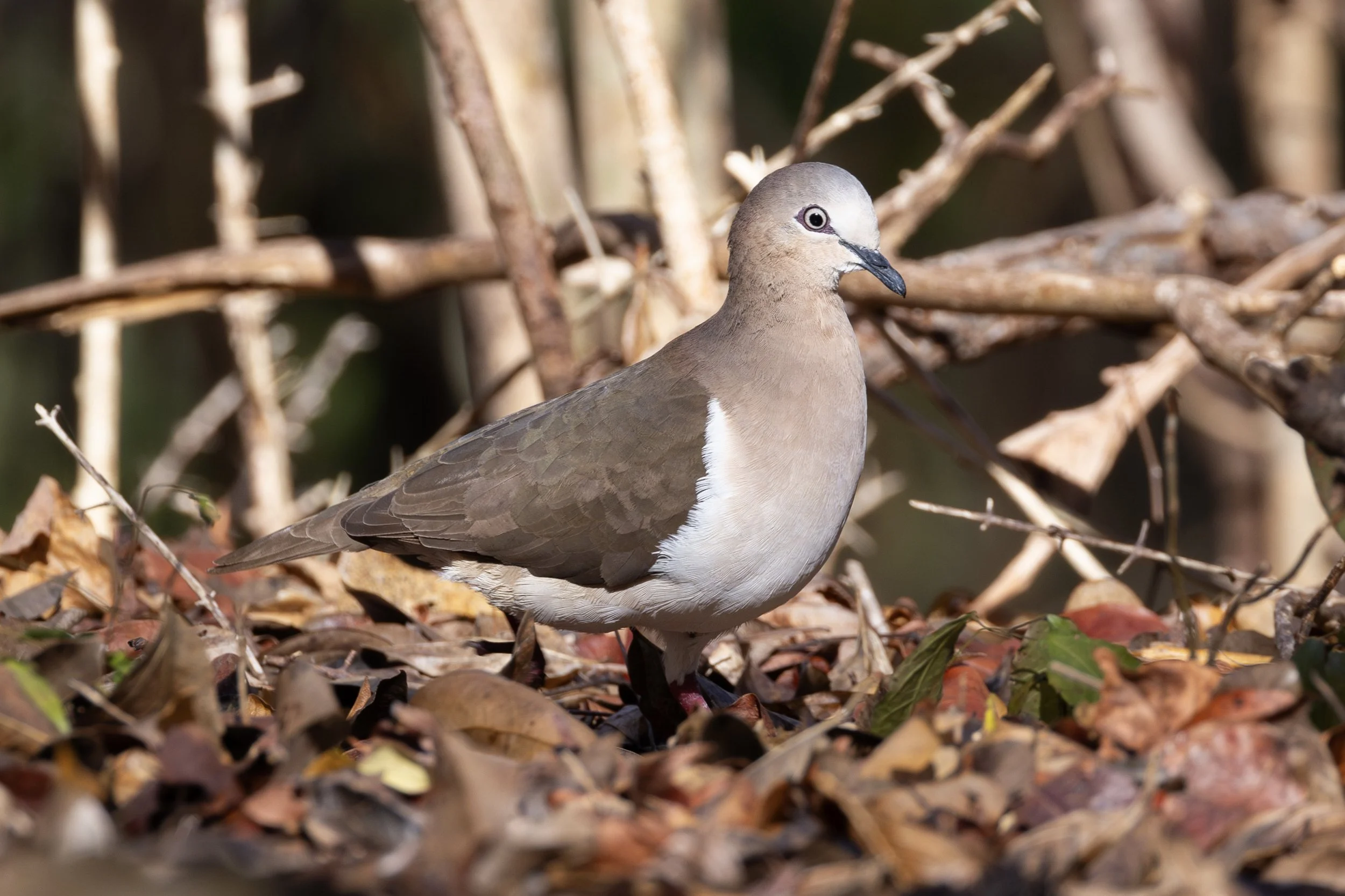
One of the last of its kind, a lone Grenada Dove forages on the dry forest floor Photo © Jonathan Slifkin - Birding the Islands client
Following a 10-minute drive from our hotel, we arrive in the last remaining habitat of one of the most critically endangered species on the planet: the Grenada Dove.
Latest estimates suggest the surviving number of Grenada Doves could be as low as 30 individuals! It is a species that has been pushed to the brink through a vicious combination of natural disasters, destruction of habitat, and introduction of invasive predators. Click here to watch Birding the Islands owner and Lead Guide Ryan Chenery discussing the perils facing this single-island endemic, and to learn more about other endemics in the region.
Patience will likely be needed as you stroll the easily travelled trails within this dove’s dry forest habitat, all the while listening for the tell-tale mournful notes of its song. Despite the low numbers, your guide’s experience and knowledge (amassed over many previous trips), should provide you with an excellent chance of a sighting of a bird few people have ever been fortunate enough to see. After our time spent in the company of this delicate, unassuming dove, we’ll explore the rest of its natural habitat - the surrounding dry woodland - also home to species such as the recently split Grenada Wren, Spectacled Thrush, handsome Mangrove Cuckoo, unique local race of Hook-billed Kite, and the near-endemic and usually vocal Grenada Flycatcher.
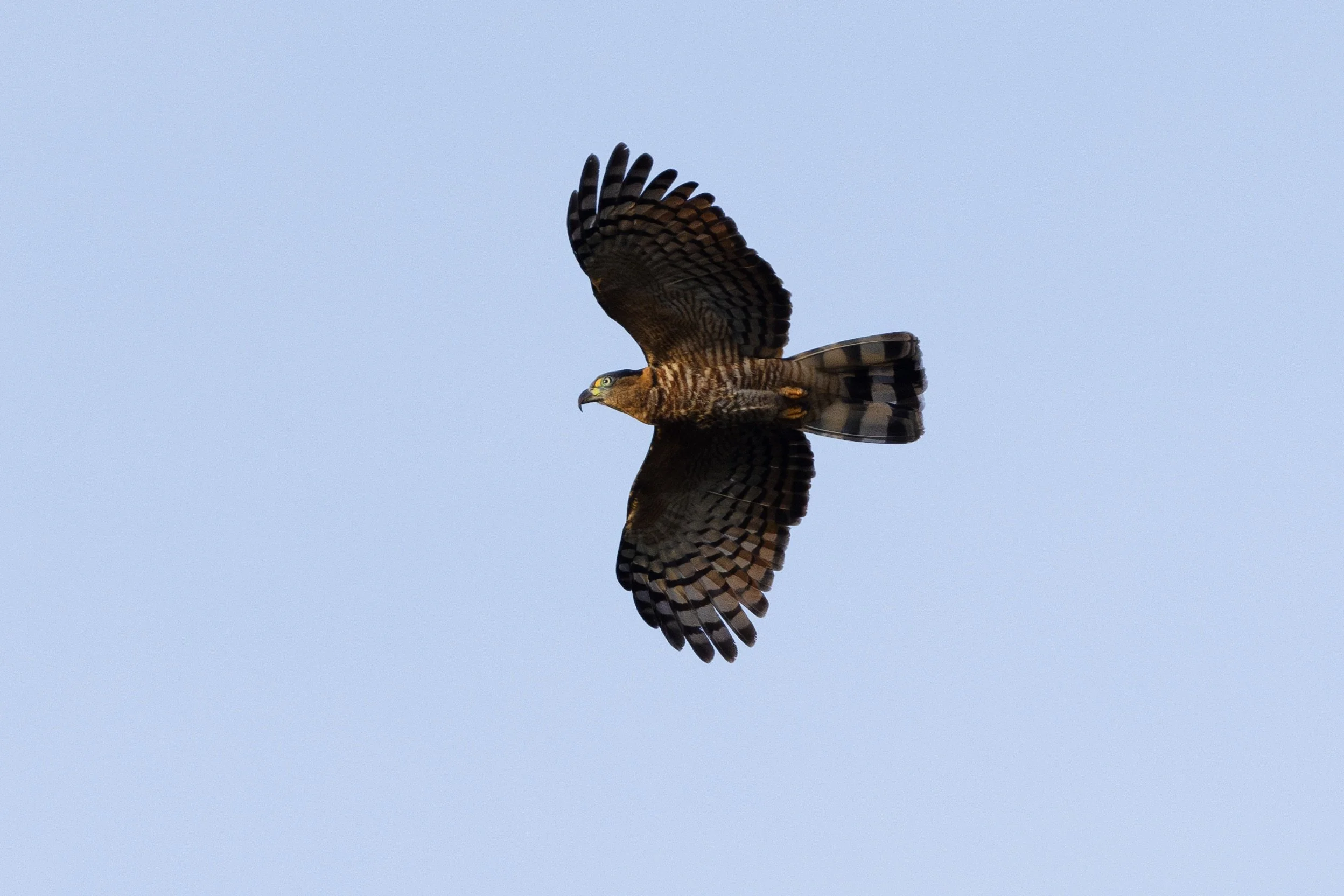
Hook-billed Kite soaring over dry forest habitat Photo © Jonathan Slifkin - Birding the Islands client
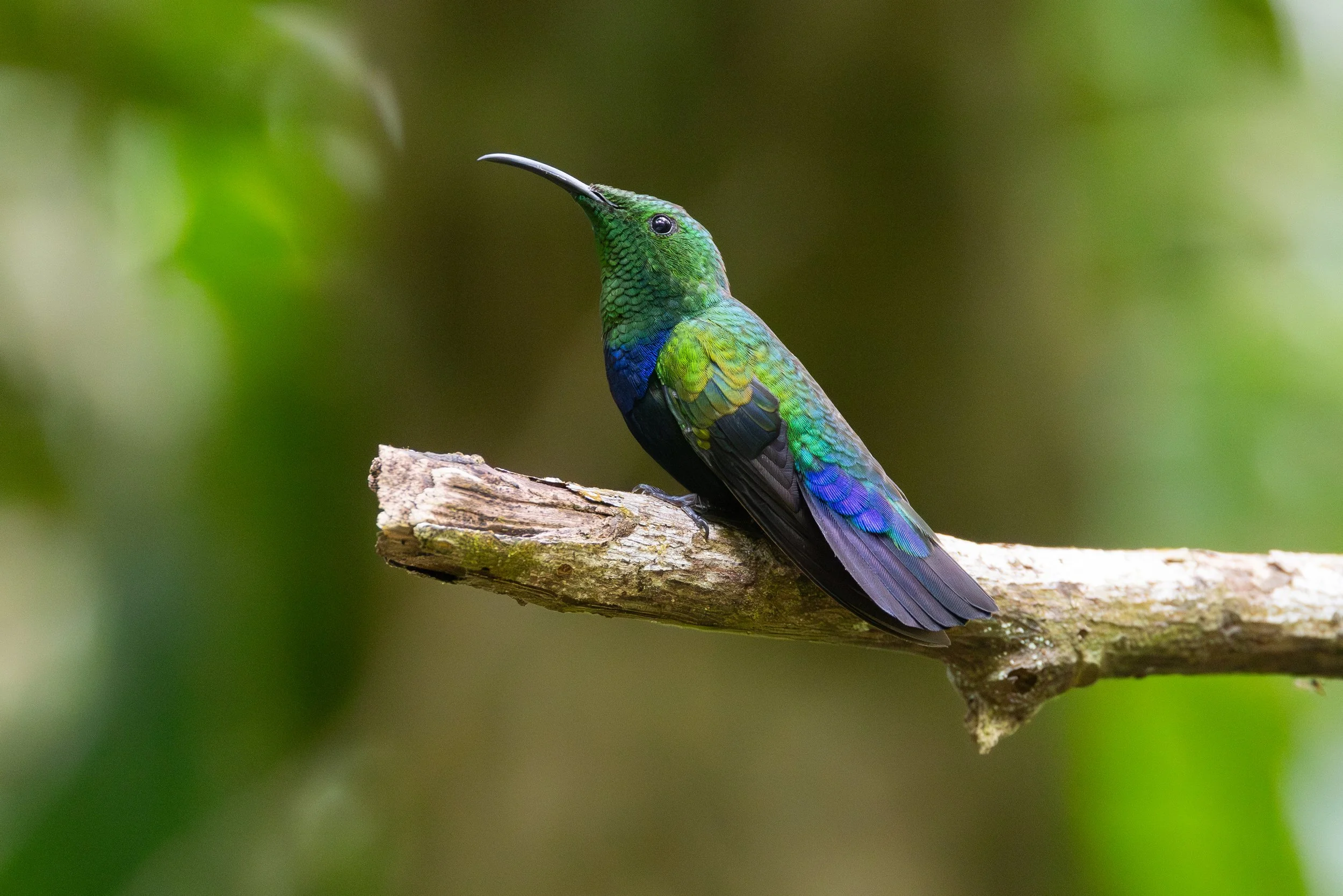
The stunningly plmaged Green-throated Carib Photo © Jonathan Slifkin - Birding the Islands client
From the south of the island, we journey north, passing stunning marinas and sparkling bays, until we arrive in quiet villages perched on the edge of lush rainforest. The north of the island is dominated by towering mountains and windswept slopes, and here tucked away in tiny pockets of sheltered heliconias, we focus our attention on encounters with two hummingbird species: the endemic subspecies of Green-throated Carib and the larger Rufous-breasted Hermit. Also of interest here is the Lesser Antillean Thrush (previously considered a subspecies of Cocoa Thrush) and the stunning Grenada Tanager. Those interested in mammals may even have sightings of Greater Bulldog Bats and troops of introduced Mona Monkeys - now at home in the tropical forests of the “Spice Isle”.
At a tranquil lookout a picnic lunch is enjoyed, before returning to our hotel. Here, those wanting to continue the birding may opt to stroll the nearby environs where Black-faced Grassquits, Eared Doves and Common Ground Doves are all possible; while others may prefer to take a dip in the ocean or pool before dinner.
Day 3: travel to St Lucia, explore St Lucia
A morning flight sees us touchdown in the coastal capital of Castries, St. Lucia. Upon arrival, we take lunch at a delightful local establishment located on the beach and boasting hearty meals of roast chicken, stew-pork, and the ever popular Caribbean fare of peas and rice and macaroni pie.
Fortified, we make our way to a bird-rich ecotone located in the northeast of the island. This quiet, remote site is known to harbour a number of this beautiful island’s indigenous species, and it is no exaggeration to state that here, numerous species of tropical birds will join the myriad Gulf Fritillaries, Cloudless Sulphurs, and Great Southern Whites flitting around us. Overhead, Lesser Antillean Swifts manipulate the air currents; amongst the trees, colourful St. Lucia Warblers peer underneath leaves in search of gorging caterpillars; overhanging tree limbs represent perfect vantage points for Lesser Antillean Flycatchers to launch attacks on winged insects; and an abundance of fruits ripening in the tropical sun can prove an irresistible lure for splendid Lesser Antillean Euphonias.
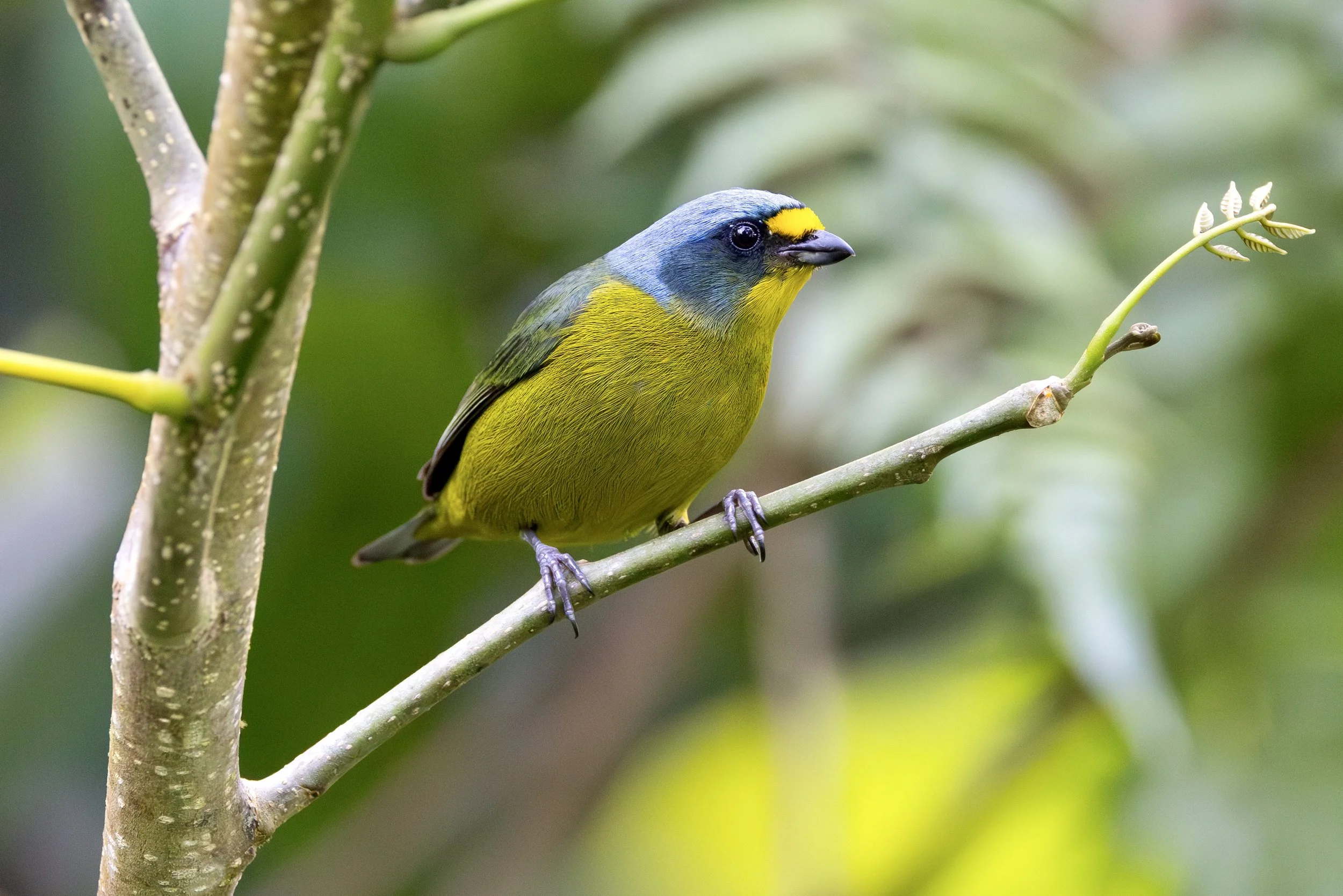
Lesser Antillean Euphonia Photo © Jonathan Slifkin - Birding the Islands client
As the sun begins to lower, we return to the van along a trail offering forest views on one side and sweeping vistas of the raging Atlantic Ocean on the other. This is a special place, and before boarding the transport we focus on one final key target - the large and brilliantly white-breasted St. Lucia Wren. Following the afternoon birding, we check into our resort and after a refresh settle down for a delicious dinner.
Day 4: explore St. Lucia
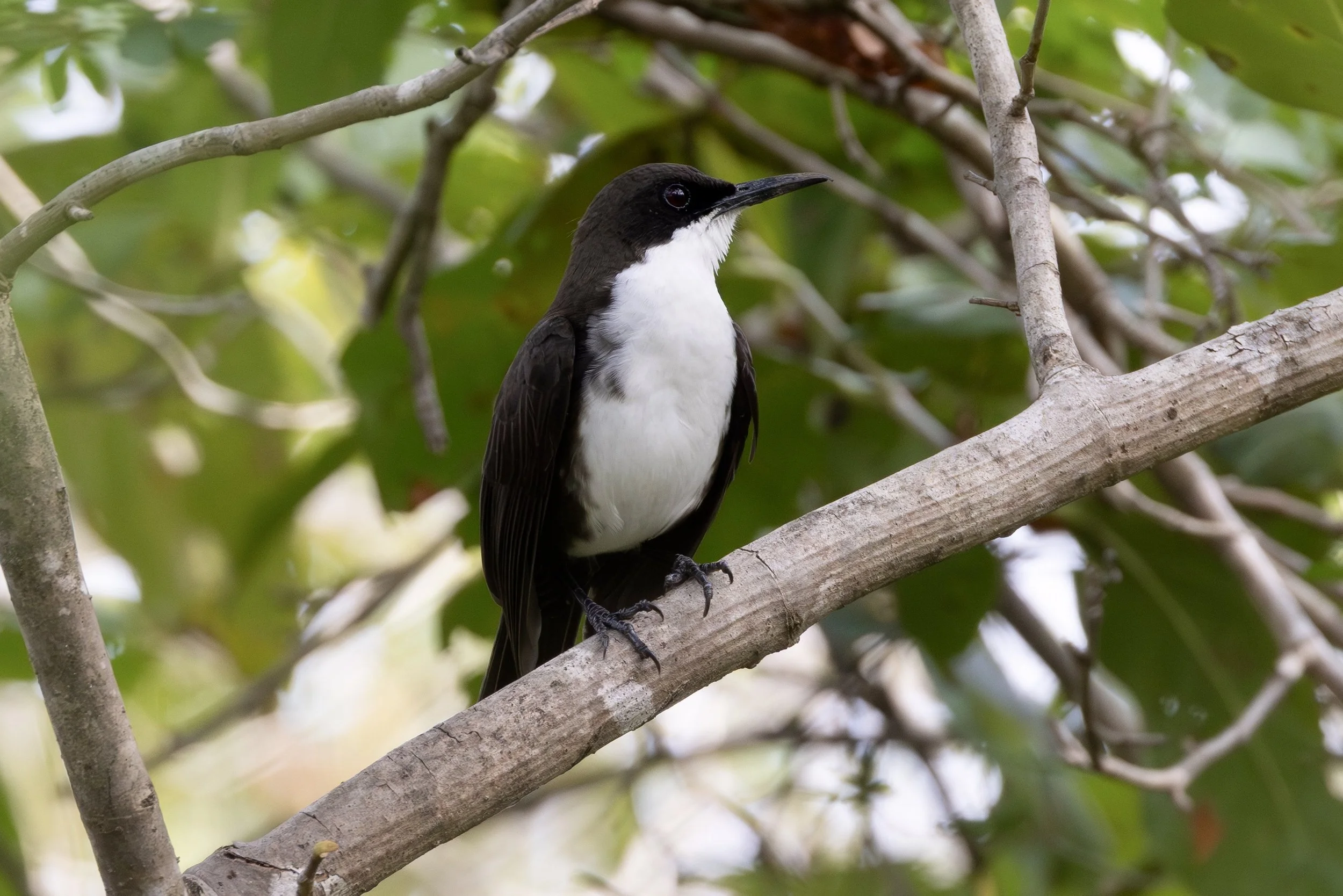
The boldly patterned St.Lucia Thrasher Photo © Jonathan Slifkin - Birding the Islands client
This morning is reserved for venturing into one of the most threatened habitats remaining in the entire Caribbean: the dry broad-leafed coastal forest. Representing prime beachfront real estate for developers, these forests have been mercilessly cleared on the majority of islands - often at the expense of numerous regional species. Yet small pockets still remain, (the one we visit today only existing due to the presence of a significant population of Fer-de-Lance) and are home to an array of birdlife not seen on the rest of the island. The recently described St. Lucia Thrasher is at home amongst the thorny dry trunks and leaf-littered floors of these unconventional forests, and is our primary target. We will spend the morning walking the well-established trail, and watching for small family groups of this peculiar species foraging close by - perhaps by identifying their hoarse raspy calls. Other species at home in this dry forest setting include the always vocal Caribbean Elaenia, delicate St. Lucia Pewee, and imposing endemic subspecies of Carib Grackle.
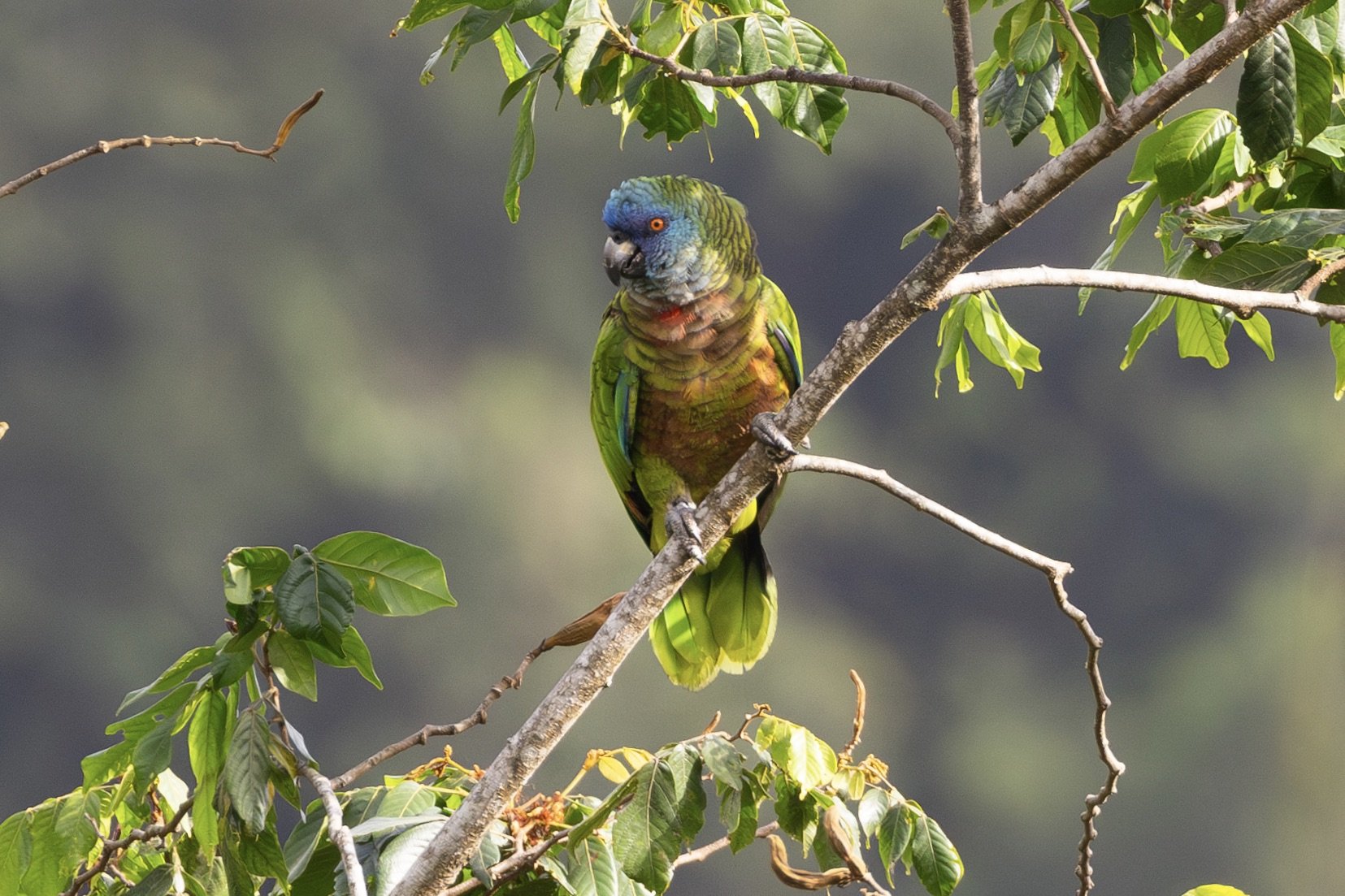
The spectacular St.Lucia Amazon has made an impressive comeback after once being on the brink of extinction Photo © Jonathan Slifkin - Birding the Islands client
Later today, we travel to the island’s showpiece natural attraction: the sprawling Des Cartiers Rainforest. This vast primary forest is dominated by towering trees (including the majestic and aromatic Lansan, the impressive Sandbox and Caribbean Royal Palm), along with gargantuan Tree Ferns, tiny bromeliads and orchids – many indigenous to the region. We spend a wonderful time here, walking the well-maintained trails and learning about some of the unique flora all around us. As we meander along the forest trail, we listen for the short sharp note of the vibrantly coloured St. Lucia Oriole - at home in this lush natural setting, along with the high-pitched song of the critically endangered St. Lucia Black Finch - often seen in pairs amongst low lying shrubs at the side of the trail. Our forest walk culminates at an observation area overlooking a cavernous valley. Here we should be afforded stunning views of the island’s national bird (and most colourful of all Amazonas) – the magnificent St. Lucia Parrot. At this site, we are also in the presence of myriad other deep-forest dwellers such as the inquisitive Pearly-eyed Thrasher.
Depending on the time, your leader will make the decision as to whether to drive west to the historic town of Soufriere with its towering peaks of Les Pitons, where after lunch a stroll into a nearby gardens provides opportunities for views of hummingbirds and bananaquits; OR the group will visit a usually productive wetland to which we are granted exclusive access and where we should have encounters with a selection of visitors from North America, often including Blue-winged Teal and American Wigeon, Tricoloured Heron and Belted Kingfishers along with Spotted Sandpipers, Solitary Sandpipers, Willet, and Greater as well as Lesser Yellowlegs. Arriving back to our resort the pool and / or a swim at one of St. Lucia’s most popular and scenic beaches beckons before dinner.
Day 5: travel to St Vincent, encounter with St Vincent Parrots
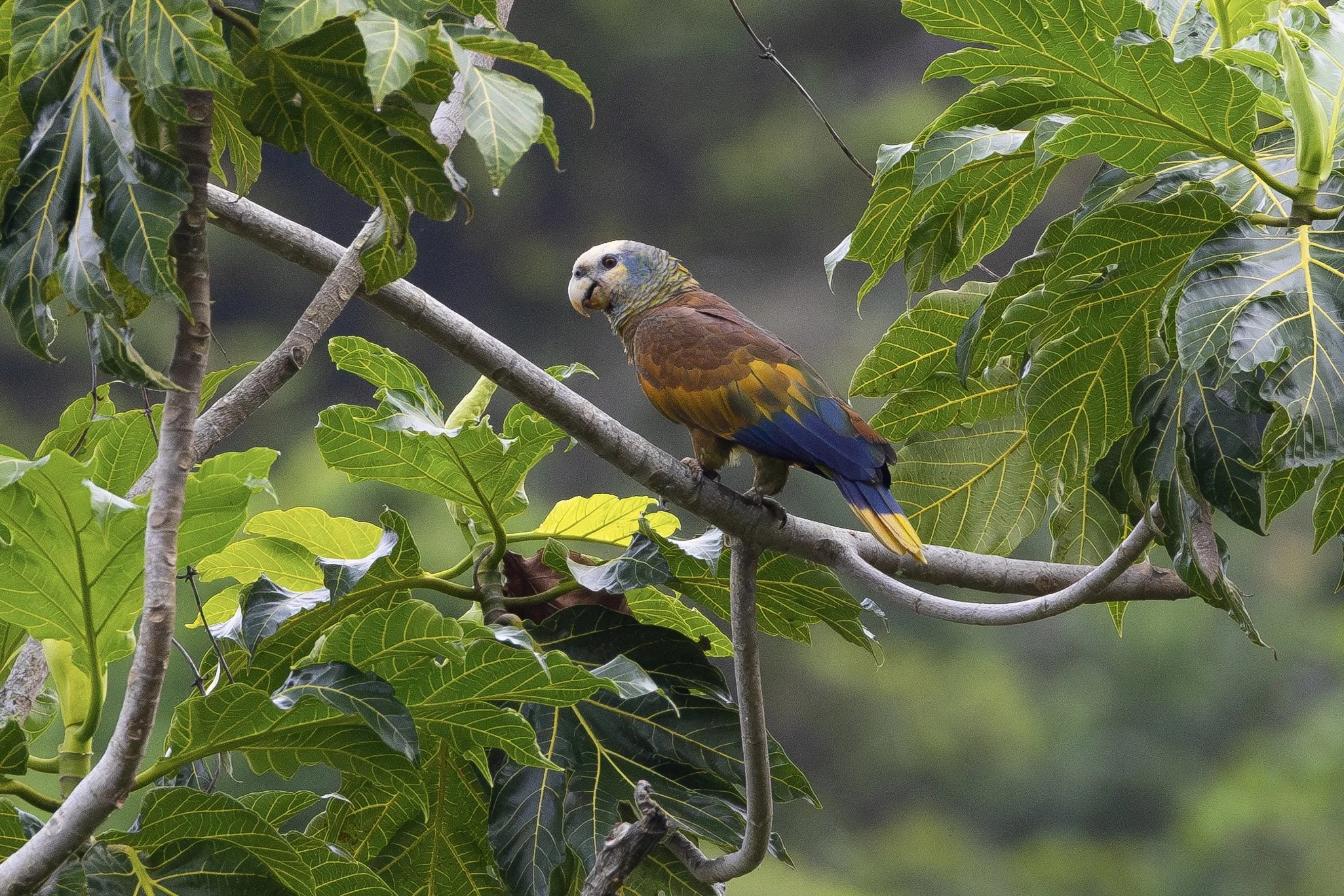
The second largest Amazona in the Caribbean - the uniquely plumaged St.Vincent Amazon Photo © Jonathan Slifkin - Birding the Islands client
On arrival in St. Vincent, we make for a rugged coastline where we enjoy a picnic lunch whilst gazing out to see as the churning Atlantic Ocean batters the shore. A small estuary here holds the possibility of more migrant North American waders and herons, while nearby ponds may hold shy treasures such as Wilson’s Snipe.
After lunch we head out into the field, where we endeavour to be one of the few groups of people on the planet to observe small flocks of St. Vincent Parrots filling the skies around us. We make for a site known only to a handful of local forestry officers, and one that sees our vehicle cross the same river SEVEN times at different locations, until we are deep in the heart of the densely-forested north. After strategically selecting our viewing sites, we wait for the raucous parrots to begin to return to their roosts in the lush forests around us. This is a species that was long on the verge of extinction (still listed on the IUCN most threatened species on the planet), and the opportunity to have close views of these spectacularly coloured birds in their natural habitat is one of the undoubted highlights of the trip.
We while away the late afternoon here with possible sightings of a selection of St Vincent’s other avian treasures also possible, including the recently split St Vincent Tanager, Lesser Antillean Bullfinch, and all-black morph of Bananaquit. With the sun beginning to set, we board our vehicles and make our way through stunning scenery to our beachside hotel.
Day 6: explore St Vincent
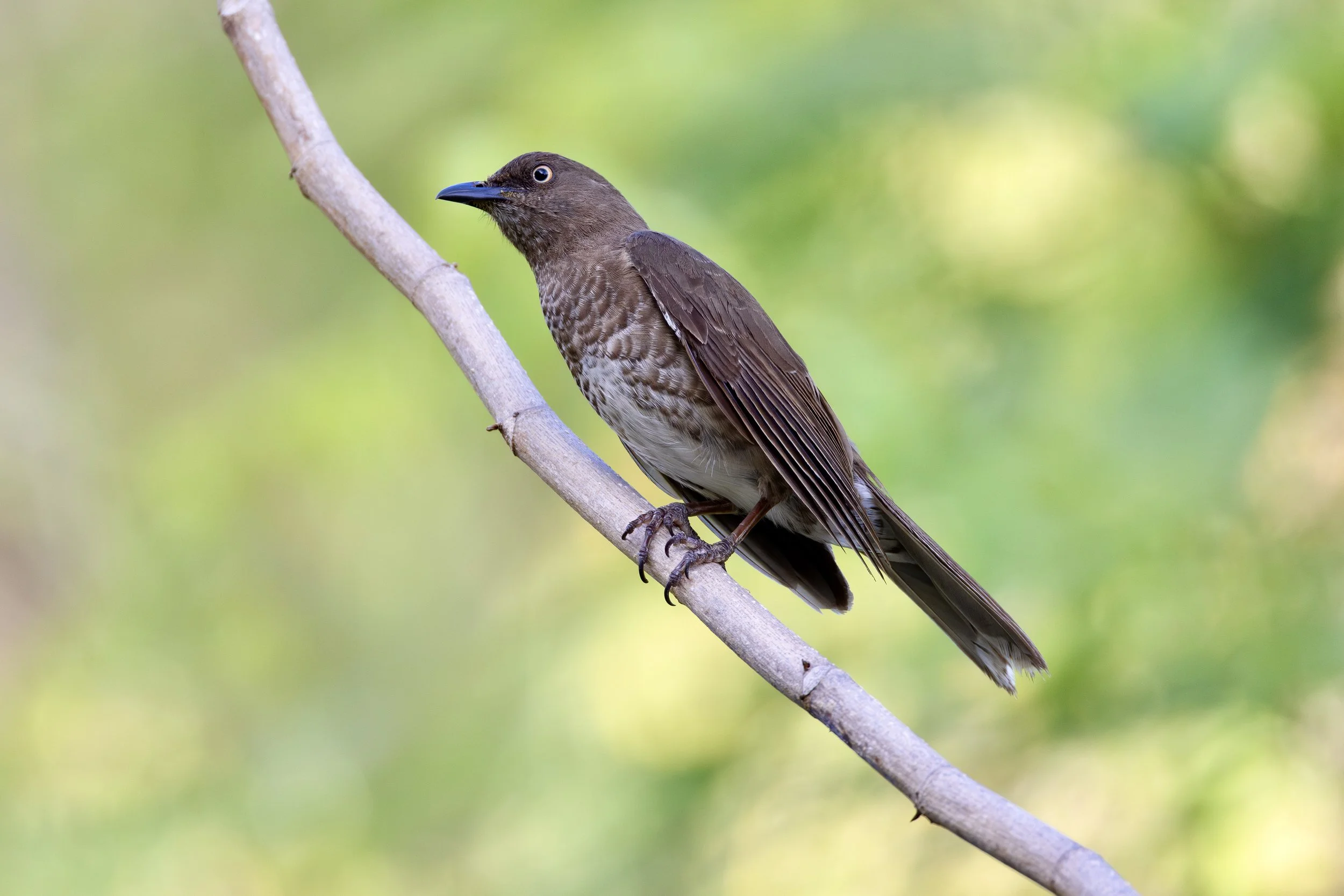
One of many Lesser Antillean endemics seen on this trip - the Scaly-breasted Thrasher Photo © Jonathan Slifkin - Birding the Islands client
This morning, we travel into the lush central highlands of the island, and here make our way along tranquil forest paths lined with wild Begonia, Cecropia and Ficus, to the best sites remaining to see the critically-endangered and little-known endemic Whistling Warbler. This intriguing member of the monotypic genus Catharopeza is the rarest warbler in the region and patience will likely be needed before it shows itself - making the reward of a sighting all the more special.
In these dense moist forests we should also enjoy views of the fruit-loving Scaly-breasted Thrasher, Yellow-bellied Elaenia, recently recognised St. Vincent Wren and ever curious Mangrove Cuckoo. As the sun rises higher, impressively sized Common Black Hawks begin to circle on thermals.
Lunch is enjoyed back at the hotel’s beachfront restaurant, and as the warm breezes waft across the sea, Brown Boobies, Magnificent Frigatebirds, Laughing Gulls, Royal Terns and many more make forays closer to shore. The remainder of the afternoon is given over to relaxation by the pool or a swim in the tranquil waters of the Caribbean Sea.
Day 7: travel to Dominica, explore Dominica
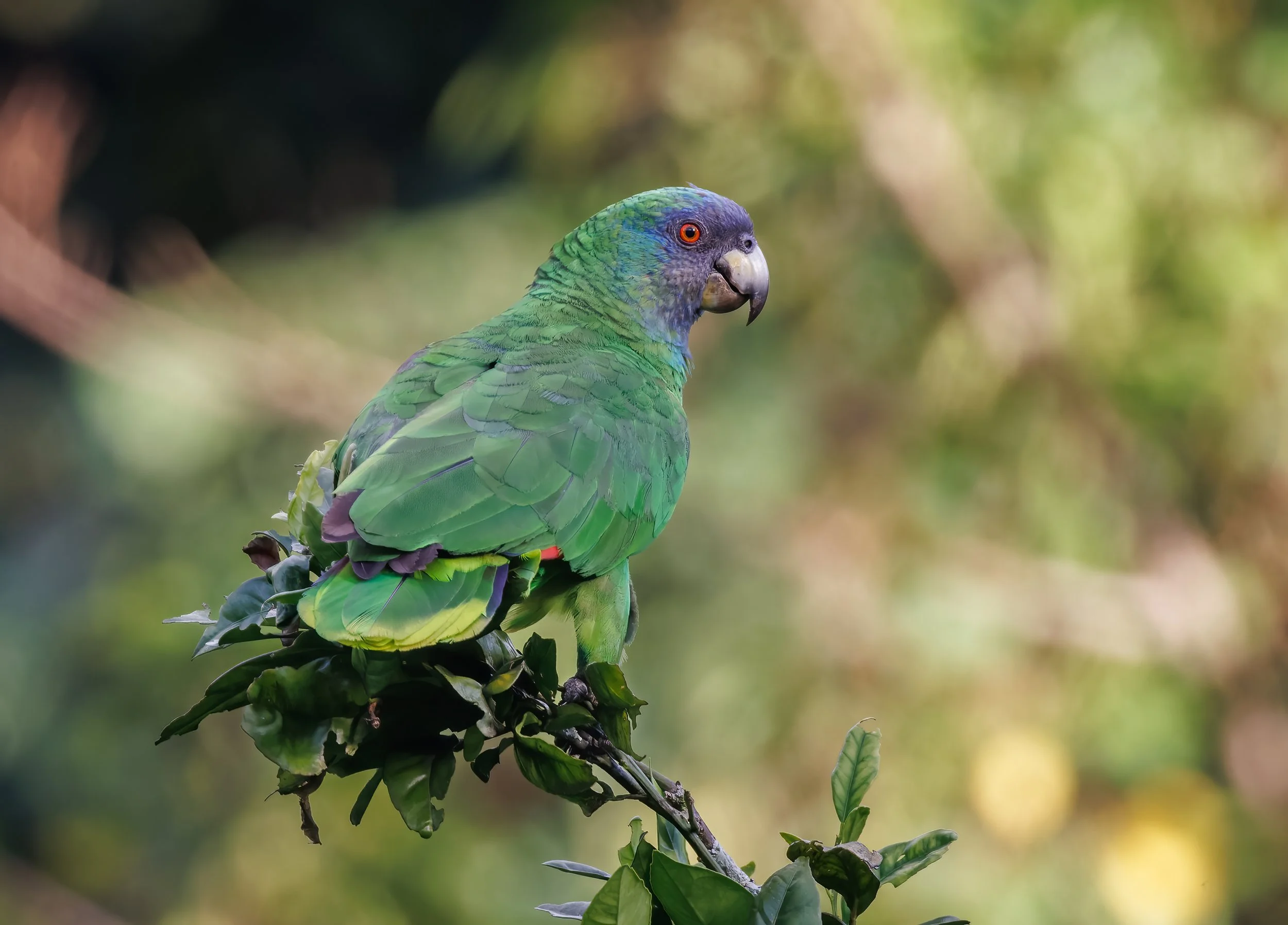
One of two endemic Amazona parrots on Dominica - the Red-necked Parrot Photo © Mike Edgecombe - Birding the Islands client
Following breakfast, we travel to Dominica. Upon arrival, we are met by pre-arranged transport and transferred to our accommodation, where we have lunch at our hotel’s restaurant, prior to making the relatively short drive into the nearby Northern Forest Reserve.
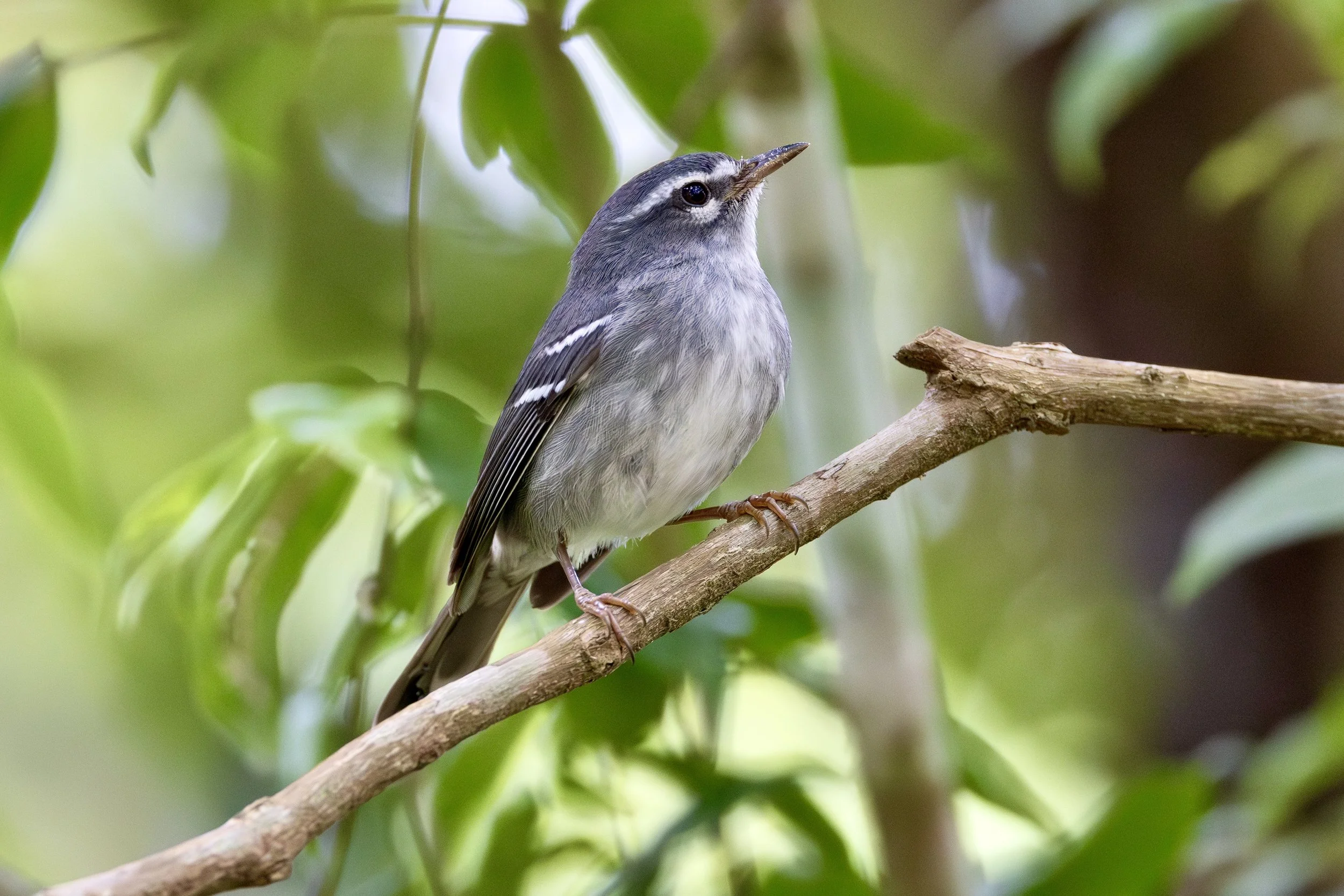
The near-endemic Plumbeous Warbler Photo © Jonathan Slifkin - Birding the Islands client
Here, we will not have been travelling far before the mellifluous calls of an array of regional species give us cause to pull off the track to investigate. Specialities including the island’s more numerous (but still highly threatened) endemic Amazona - the Red-necked Parrot, recently split Kalinago Wren, and Lesser Antillean Saltator may provide excellent views by perching conspicuously in sparsely leafed mangoes; while pairs of delicate near-endemic Plumbeous Warblers greet their every leap along creeping vines with excited trill calls.
Fifty-five species of butterfly including regional endemics such as Dominican Hairstreak, Godman’s Hairstreak, and St. Lucia Mestra have been recorded on Dominica, and as we begin our stroll into the cloud forest for our first shot at sightings of one of the rarest parrots in the world - the gargantuan and simply superb Imperial Amazon - we cast our eyes to sunlit patches of forest floor where these delicate butterflies frequent. Whilst we wait for an appearance by the Imperial, we learn from a knowledgeable and experienced forestry officer, about the fascinating and wondrous species of flora all around us.
Dinner will be back at our cliff-top hotel where views of the sun setting upon the tranquil Caribbean Sea are simply spectacular.
Day 8: explore Dominica
Teeming with waterfalls and boasting a river for every day of the year, untamed and rugged Dominica is a naturalist’s dream. This morning, we set off before dawn in order to have another opportunity of seeing the largest Amazona parrot on the planet: the majestic Imperial Amazon.
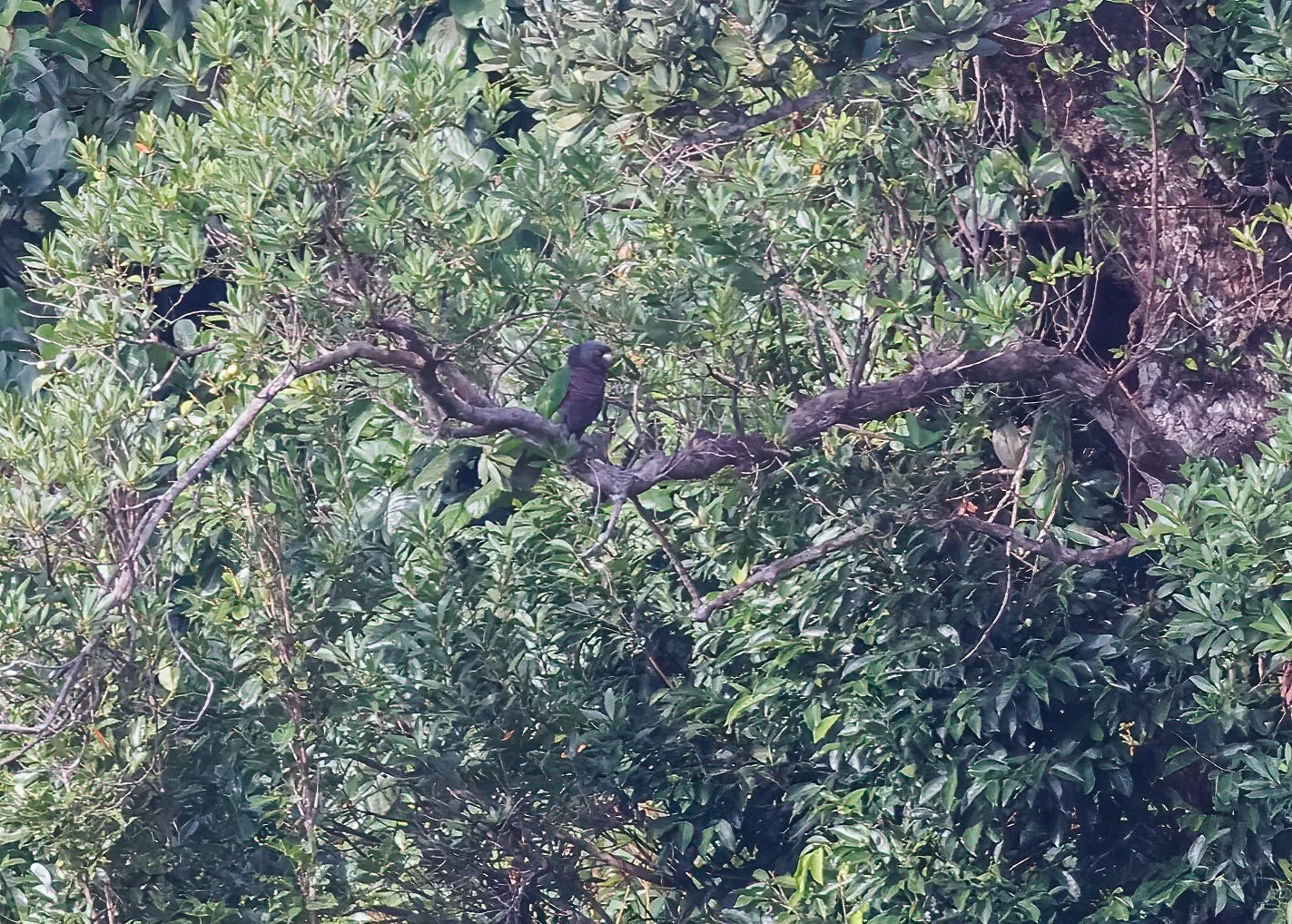
The critically endangered Imperial Amazon Photo © Mike Edgecombe - Birding the Islands client
From our lofty vantage point in the heart of the island’s vast tracts of cloud forest, we gaze out across deep verdant valleys, carefully surveying the towering tree canopy, for this critically-endangered bird (thought by some to now number less than 60 individuals!). As we scan the skies, other smaller species manipulate the swirling winds, such as the deep grey and maroon coloured Scaly-naped Pigeon and rich russet coloured subspecies of Broad-winged Hawk. These are often joined by flocks of dozens of Lesser Antillean Swifts, and even the occasional Black Swift. Other avian wonders, known to these forests include the gargantuan and truly stunning Purple-throated Carib and the always entertaining Brown Trembler (often seen displaying with cocked-tail and quivering wings).
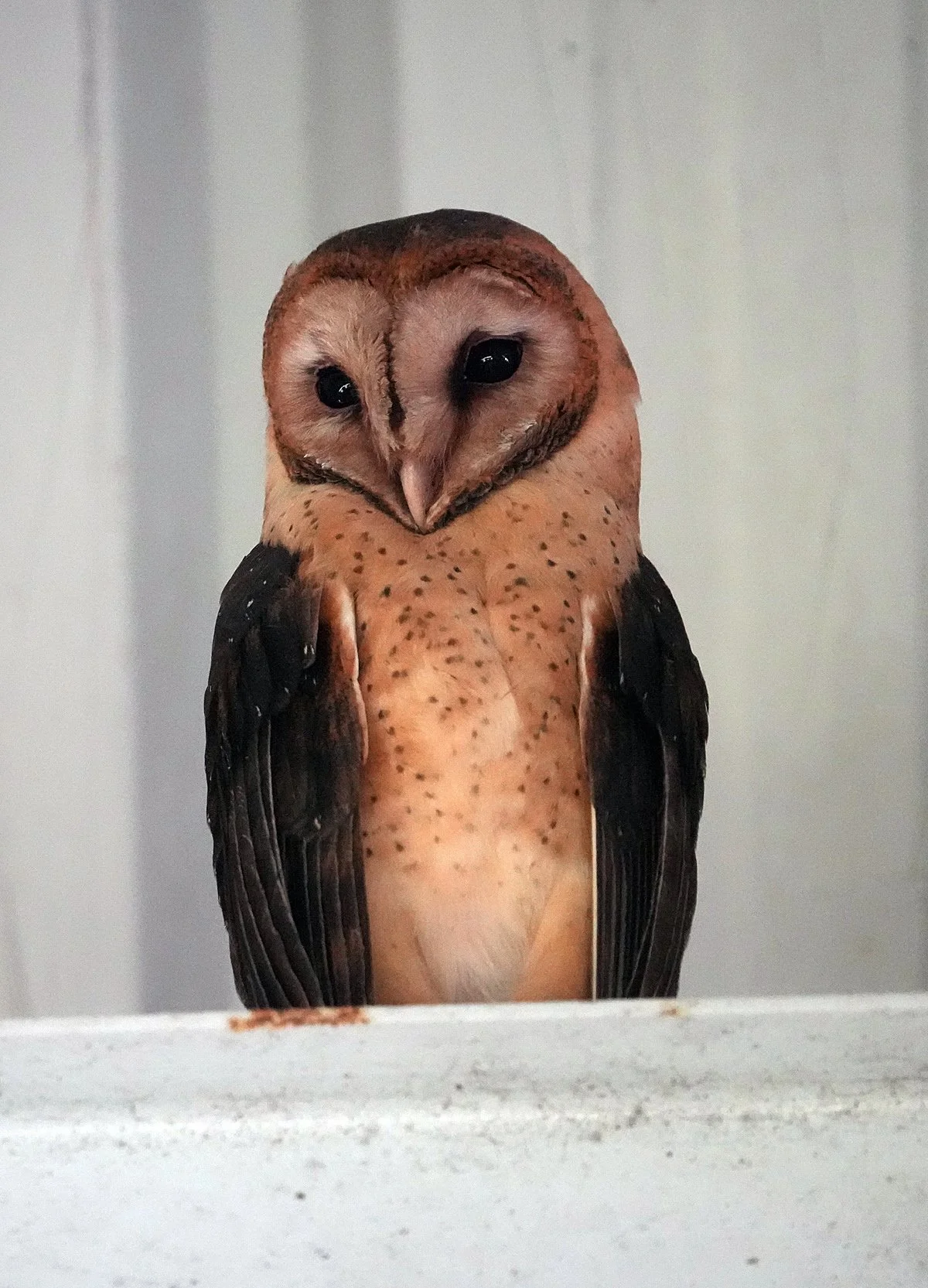
There is much discussion over whether this owl on Dominica is a Barn Owl or an Ashy-faced Owl Photo © Phil Davis - Birding the Islands client
We break for lunch, enjoyed at a favoured roadside haunt of locals and one that boasts a selection of local specialities. Post-lunch birding offers opportunities for an audience with the enigma that is the Lesser Antillean Owl as well as a striking near-endemic - the Eastern Red-legged Thrush. We later take a stroll along a quiet river, the banks of which are often frequented by the minuscule and elegantly coiffured Antillean Crested Hummingbird, stalking Green Herons, and even perched Ringed Kingfishers.
Assuming the birds have cooperated and shown themselves in a timely fashion, there should be the opportunity to return to our accommodation and gaze out at a sunset whose beauty often equals that of the birds seen. Another delicious Caribbean dinner follows atop the cliffs.
Day 9: travel to Martinique
Upon arrival on this Overseas Department of France, we are collected by pre-arranged transport and make for the quiet sea-side village of Tartane. The shallow clear waters here are home to marine turtles, spotted-eagle rays and gars, and after a lunch typically offering fare such as marlin, garlic ribs and chicken boulane we spend some time gazing down upon coral reefs for sightings.
From here we make the short drive into the dry scrubby forests that dominate the rain-starved northeast coast. This is Martinique Thrasher territory. As with their larger and significantly darker counterparts in neighbouring St. Lucia, the thrashers here roam the forest floor in small family groups and flick leaves incessantly in search of all manner of invertebrates. These birds share this habitat with the regional endemic Lesser Antillean Saltator, endemic subspecies of Yellow (‘Golden’) Warbler, Zenaida Doves, Shiny Cowbirds, and ever-vocal Black-whiskered Vireos. We even have the remote possibility of an encounter with a roosting White-tailed Nightjar.
After arriving at our hotel, some in the group may choose to slip into the infinity pool and gaze out upon the expansive harbour and glittering lights of Fort-de-France.
Day 10: explore Martinique
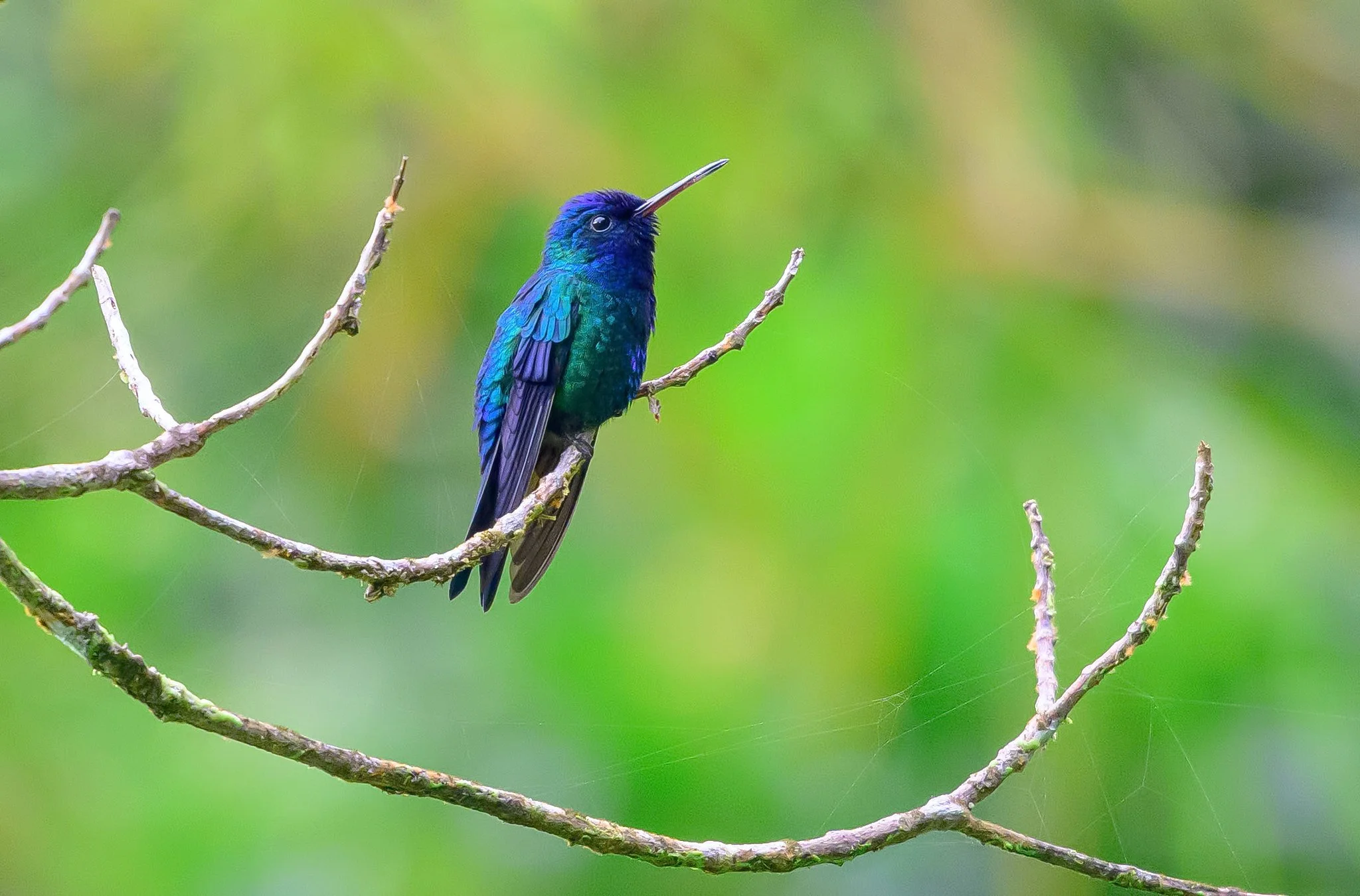
The dazzling Blue-headed Hummingbird perched along the trail in Carbet Mountains Photo © Shailesh Pinto - Birding the Islands client
This morning we make for the oldest mountain range in the entire Lesser Antillean region the Carbet Mountains - a vast region, dominated by rich, incredibly verdant and wonderfully biodiverse forest. Slowly entering this world, we are greeted by wisps of light cloud swirling around towering peaks, large bromeliads clinging to moss-laden trunks and gargantuan heliconias, each seemingly boasting more beautifully coloured bracts than the other. Our primary target here is the Martinique Oriole. This bird’s striking orange and glossy black plumage, together with the black and silver two-toned bill is consistent with many other orioles, but what truly sets this species apart is its deep chestnut-burgundy hood - making for a rich and fascinating contrast in colours unique to Icterus bonana. This tranquil primary forest is also home to a minuscule near-endemic many regard as the most stunning hummingbird in the entire Lesser Antilles: the positively dazzling Blue-headed Hummingbird. Both males and females frequent the low lying members of the Rosaceae family that line the trail before us and frequently flit between pockets of the shrubs nectar-rich white flowers.
After the key targets have been sighted, we take time to stroll along the well maintained trail coursing through this verdant habitat and here have the opportunity to spend time in the presence of still more regional specialities - including the always lively Grey Trembler, as well as the owner of what is surely the most ethereal and hypnotic song of all Caribbean birds - the splendid Rufous-throated Solitaire.
The farewell dinner tonight marks the perfect occasion to recount our adventures through the magical islands of the Lesser Antilles.
Day 10: an endemic for the road and departures
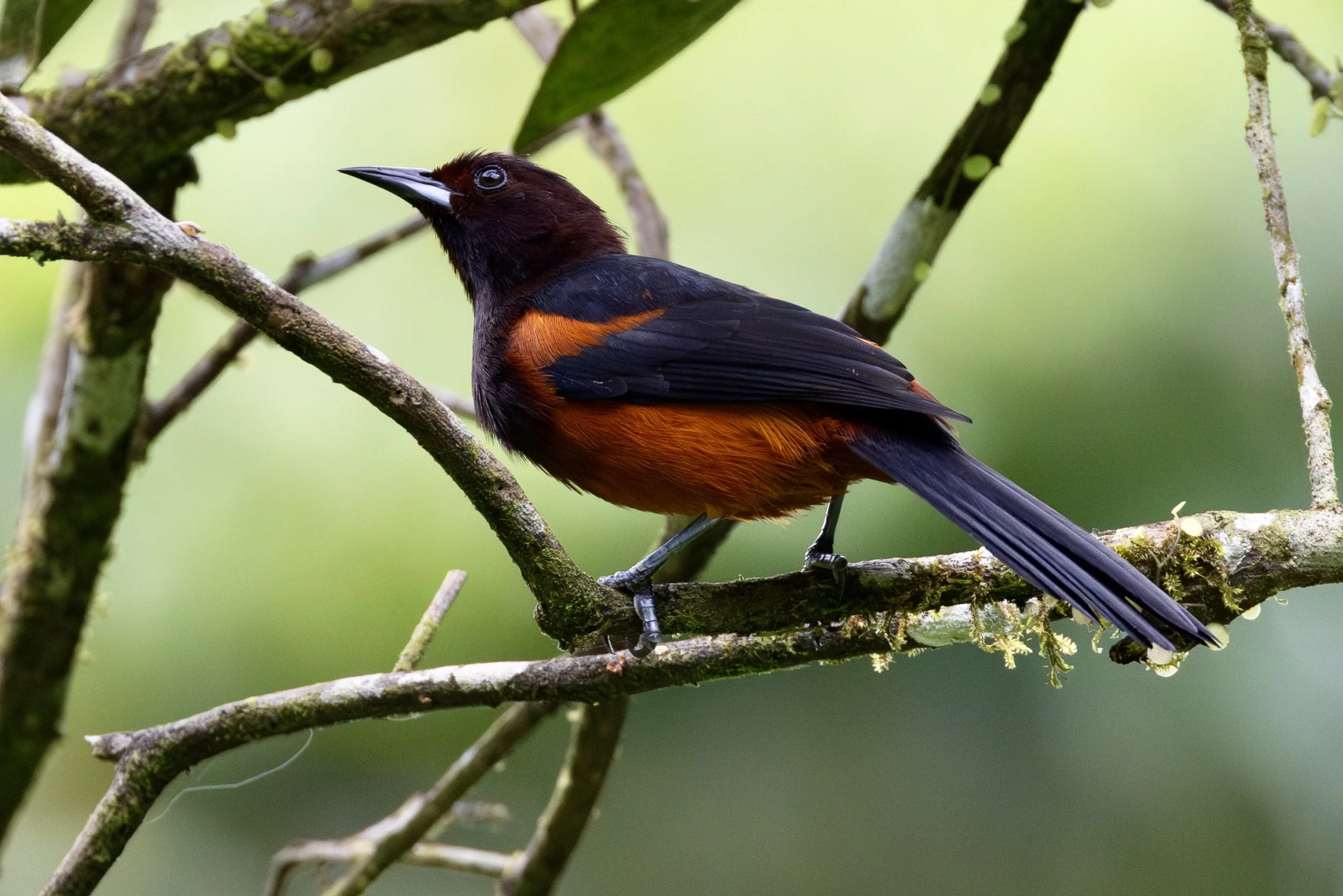
The striking Martinique Oriole Photo © Jonathan Slifkin - Birding the Islands client
Located near to our hotel is a lush expanse of forest home to the final endemic we target on this remarkable multi-island adventure.
After an audience with this stunning species and likely encounters with Ruddy Quail-Dove and Spectacled Thrush, we return to our hotel, where we settle in on the large outdoor and elevated balcony to enjoy an extensive buffet breakfast of eggs, sausage, fresh fruit, yoghurts, chocolatines and croissants. While we eat, we may be treated to fly-bys of Orange-winged Amazons and Rose-ringed Parakeets, whilst Tropical Mockingbirds and Lesser Antillean Bullfinches perched in the surrounding vegetation provide a final island serenade.
Pricing
2027
Tour Price: USD$5985 per person (based on double occupancy rates and a maximum number of clients per tour). Single Supplement, i.e. if you would prefer to have a single room for the duration of your tour, there is an additional charge of: USD$920.
Included in Price: all scheduled and stated flights between islands and internal boat charges between islands; local taxes; regional airport departure taxes for stated flights included on the tour; all accommodations; pre-arranged food; bottled water/drinking water with meals and on birding outings; transport to and from birding destinations on all islands; park/site admission fees; local guide fees; and hotel and restaurant service charges.
Tour Info
Group Size: Maximum of 10 clients plus the Birding the Islands Tour Leader (plus additional local guide if the group is at the maximum number of participants)
Terrain and Pace: We cover a diverse range of terrain on this trip, but much of the birding is conducted along easily travelled and well maintained trails as well as at roadside stops where a short walk into various habitats is all that is needed. Any light to moderate ascents are conducted at a slow, steady pace with plenty of opportunities to rest along the way. There are a couple of steeper sections of path on two of the islands, and walking poles are recommended if you would usually use these for walking off-road.
Please note that the above itinerary and pricing is subject to change.
Quisque iaculis facilisis lacinia. Mauris euismod pellentesque tellus sit amet mollis.